

An author newsletter is the one channel you truly own. Social platforms change their algorithms; stores change their rankings. Your email list lets you reach readers directly when you have a new book, a sale or news. Here's how to start one and keep readers opening it.
Why every author needs a newsletter
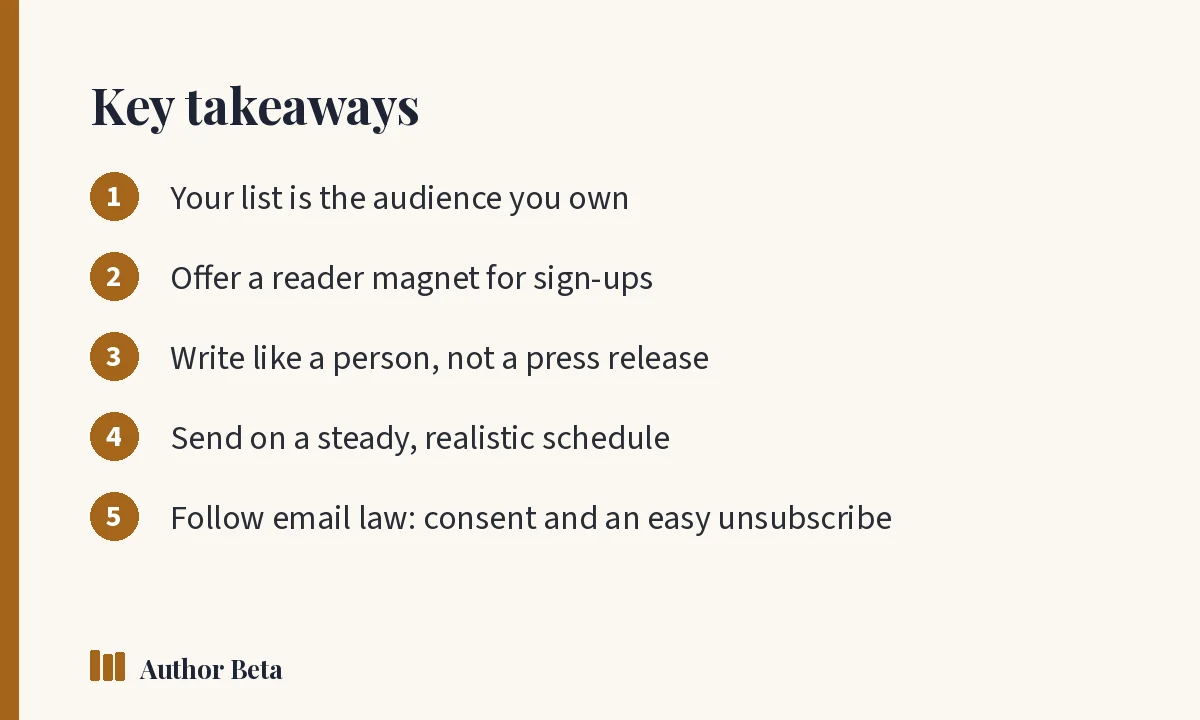
- Launches: your subscribers are often your first buyers and reviewers.
- Ownership: no algorithm decides who sees your message.
- Relationship: regular emails turn casual readers into fans.
- Feedback: you can ask subscribers questions or invite them to beta read.
Step 1: Choose an email service
Use a dedicated email service rather than personal email, so you get sign-up forms, unsubscribe links and delivery handling. Look at price as your list grows, ease of use, and automation options.
On Author Beta, paid plans include a newsletter with sign-up on your author page and issues you send.
Step 2: Create a reader magnet
A reader magnet is a free gift for signing up, such as a short story, a bonus chapter, a prequel novella or character art. It should appeal to readers of your books specifically.
Author Beta's reader magnets and review copies let you give away an ePub, with each copy made for its reader and a leak code inside.
Step 3: Put sign-up forms where readers are
- Your author page and website
- The back of every book ("Want a free story? Join my newsletter")
- Social media profiles
- Your email signature
Step 4: Send a welcome email
New subscribers are most interested right after signing up. Send a welcome email that delivers the reader magnet, introduces you, and tells them what to expect.
Step 5: Write emails readers enjoy
Write like a person, not a press release. Ideas:
- Behind-the-scenes writing updates
- Cover reveals and early chapters
- Book recommendations in your genre
- The real places or history behind your stories
- Questions for readers, such as character name polls
Mix in book promotion, but don't make every email a sales pitch.
Step 6: Pick a sustainable schedule
Monthly is a common rhythm for many authors. Consistency matters more than frequency. Readers who hear from you rarely may forget who you are; readers who hear from you too often may unsubscribe.
Step 7: Use your author newsletter at launch
Plan a sequence of emails around each release: cover reveal, pre-order, release day and a reminder. Author Beta's campaign plans draft these emails for you.
Follow email law
Email marketing laws vary by country, but common principles include:
- Only email people who signed up
- Identify yourself clearly
- Include a working unsubscribe link and honour it promptly
- Include a postal address where required
In the US, see the FTC's CAN-SPAM guide. In the EU and UK, data protection rules such as the GDPR also apply. Never buy email lists.
Measure and improve
Watch open rates, click rates and unsubscribes, but focus on engagement: replies, clicks to your books, and sales at launch. A small, engaged list is worth more than a large, silent one.
For more on where the newsletter fits in your wider plan, see book marketing for indie authors.
Ideas for your first five emails
- Welcome: deliver the reader magnet and introduce yourself.
- Your story: why you write what you write, and what's coming next.
- Behind the scenes: a real place, object or research rabbit hole behind your book.
- Recommendations: three books readers of your genre might love.
- A question: ask readers to reply with their favourite trope or character type.
Replies are valuable: they tell you what readers care about, and many email services treat replies as a sign that your messages are wanted, which can help delivery.
Growing your author newsletter steadily
Growth usually comes from a handful of reliable sources: the back of your books, your author page, reader magnets, newsletter swaps with authors in your genre, and launches. Avoid shortcuts such as buying lists, which hurt delivery and break the law in many places.
Usein kysytyt kysymykset
When should I start an author newsletter?
As early as possible, even before your first book. Collecting a small list of interested readers before launch makes release day much stronger.
How often should I send my author newsletter?
Monthly is common, with extra emails around launches. Choose a schedule you can keep.
What should I write if I have no new book yet?
Share writing progress, recommendations, behind-the-scenes stories, short fiction or questions for readers. Readers subscribe to you, not just to sales news.
Kommentit